April 1 — April 30, 2026
History Matters
Showing our children that their past is prelude to their future, with book recommendations
.The Founding of Apple Computing, Inc., April 1976
Fifty years ago this month marked the beginning of a technological revolution, with implications still unfolding today. By the mid-1970s, computers were widely used in government and business. Though full of promise, however, they were massive and unwieldy, often requiring multiple rooms, extensive equipment maintenance and replacement, huge amounts of energy, and substantial human oversight. Handheld personal digital calculators had come into use at the beginning of the decade, but they could only be used for highly specialized purposes.
On April 1, 1976, Steve Jobs, Steve Wozniak, both college dropouts, and Ronald Wayne—a veteran administrator who had worked at videogame pioneer Atari—founded Apple Computing, Inc., with Jobs and Wozniak respectively selling a Volkswagen Bus and a high-end digital calculator for just over $1,000 to fund the initial operation. Working in Jobs’ garage, they built the first Apple I computer—initially just a motherboard—for sale that summer. By 1977, with the addition of frame, monitor and keyboard, the Apple I had become a bona fide personal computer. Sales of the Apple I exploded in 1978-1979, spawning imitation and competition from rival companies such as IBM and Radio Shack. By 1980, the year Apple Computing went public, personal computers had become fixtures in millions of households in the United States and across the globe, profoundly and permanently transforming personal life, culture, government and industry.
For more information about the founding of Apple Computing, the Grateful American Book Prize recommends David Pogue’s, Apple: The First 50 Years (2026).

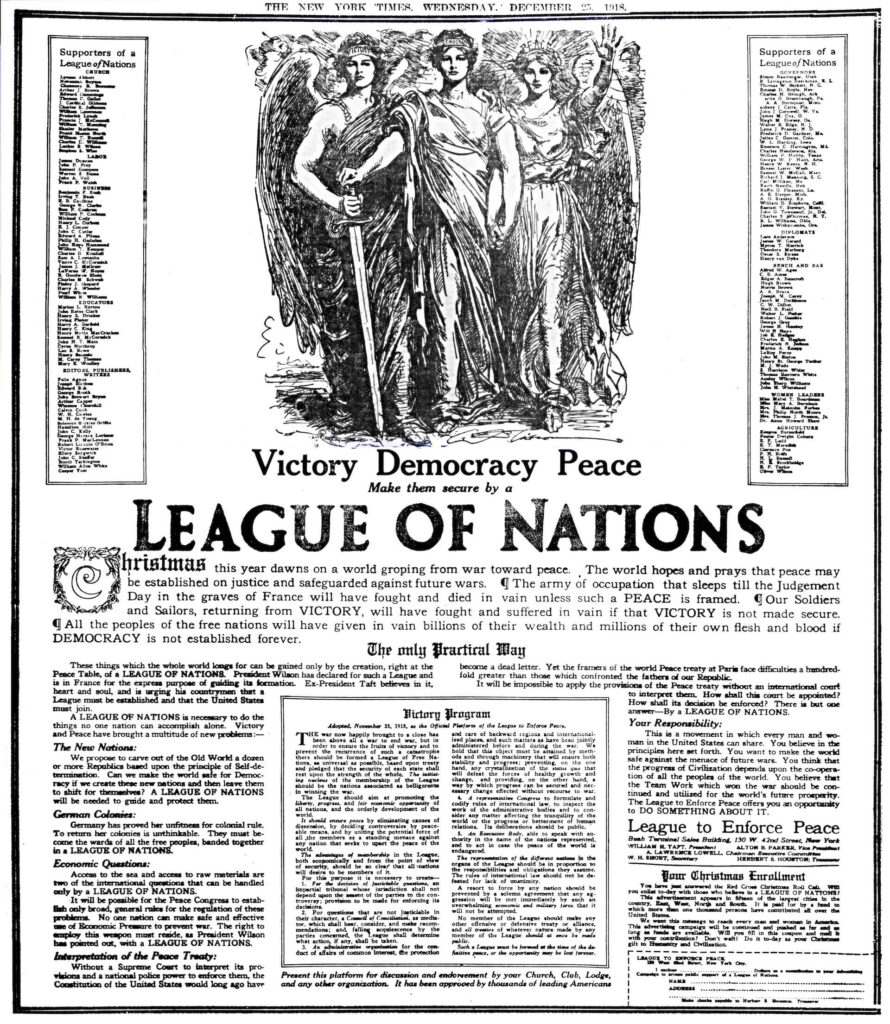
Closure of the League of Nations, April 1946
World War I, 1914-1918, was the most devastating and transformative event in modern history. By 1918, European and American scholars, philosophers, diplomats, and politicians had become preoccupied with the question of why the war had broken out, and how to ensure a just foundation for western civilization that would ensure such a conflict never took place again. U.S. President Woodrow Wilson, a scholar and idealist whose so-called Fourteen Points had established, among other things, the principle of national self-determination, was an avid supporter of the concept of a League of Nations, whose existence would ensure that diplomacy rather than war should ensure that open negotiation, rather than secret alliances and military power, prevented another world war. The League of Nations Covenant was established in Article I of the Treaty of Versailles in June 1919.
Ironically, Wilson’s commitment to the League failed to sway his fellow Americans, who preferred to turn away from international entanglements after the war. Congress refused to ratify American entry into the League, and Wilson’s efforts to overcome this resistance finally broke his health. Nations in Europe, Africa, and Asia that did join the League sought, more or less, to realize the organization’s promise; but the League proved completely inadequate to prevent a new era of international conflict in the 1930s, particularly with Japan’s campaign of conquest in China; Italy’s invasion of Ethiopia; and the rise of Nazi aggression under Adolf Hitler. When criticized or condemned, aggressor nations simply quit the League. By the time World War II broke out in 1939, the League had become an empty shell; and although it muddled through the war years, it had become superfluous by 1946, with the establishment of a new United Nations. On April 18, 1946, the League shut down for good, transferring its modest assets to the U.N.
For more information about the history of the League of Nations, the Grateful American Book Prize recommends Ruth Henig, The Peace That Never Was: A History of the League of Nations (2019).
Ed Lengel is an author, a speaker, and a storyteller.
History Matters is a feature courtesy of the Grateful American Book Prize, an annual award for high quality, 7th to 9th grade-level books dealing with important events and personalities in American history.