September 1 — September 15, 2026
History Matters
Showing our children that their past is prelude to their future, with book recommendations
The Treaty of Paris, 1783
On September 3, 1783, The Treaty of Paris officially terminated the eight-year Revolutionary War. Negotiated by Benjamin Franklin, John Adams, John Jay, and British representative, David Hartley, it codified England’s recognition of the United States as a free, sovereign, and independent nation with established boundaries—from the Atlantic Ocean to the Mississippi River in the West; the Great Lakes to the North, and Spanish Florida to the South.
The vast swath of territory provided a baseline for future American expansion, and so did the newly acquired fishing rights near the coasts of Newfoundland and the Gulf of Lawrence; an additional provision mandated that each side refrain from impeding the recovery of pre-war debts.
The accord urged Congress to “earnestly recommend” that state legislatures restore confiscated Loyalist property and to cease further persecution of them. Although some agreements proved difficult to enforce, the Treaty represented a major diplomatic triumph for young America. It secured international legitimacy to the United States and shifted the balance of power in North America. By ending hostilities and defining national borders, the new alliance permitted the former colonies to concentrate on delivering a stable government at the 1787 Constitutional Convention.
For more information, the Grateful American Book Prize recommends Richard E. Morris’ The Peacemakers: The Great Powers and American Independence.
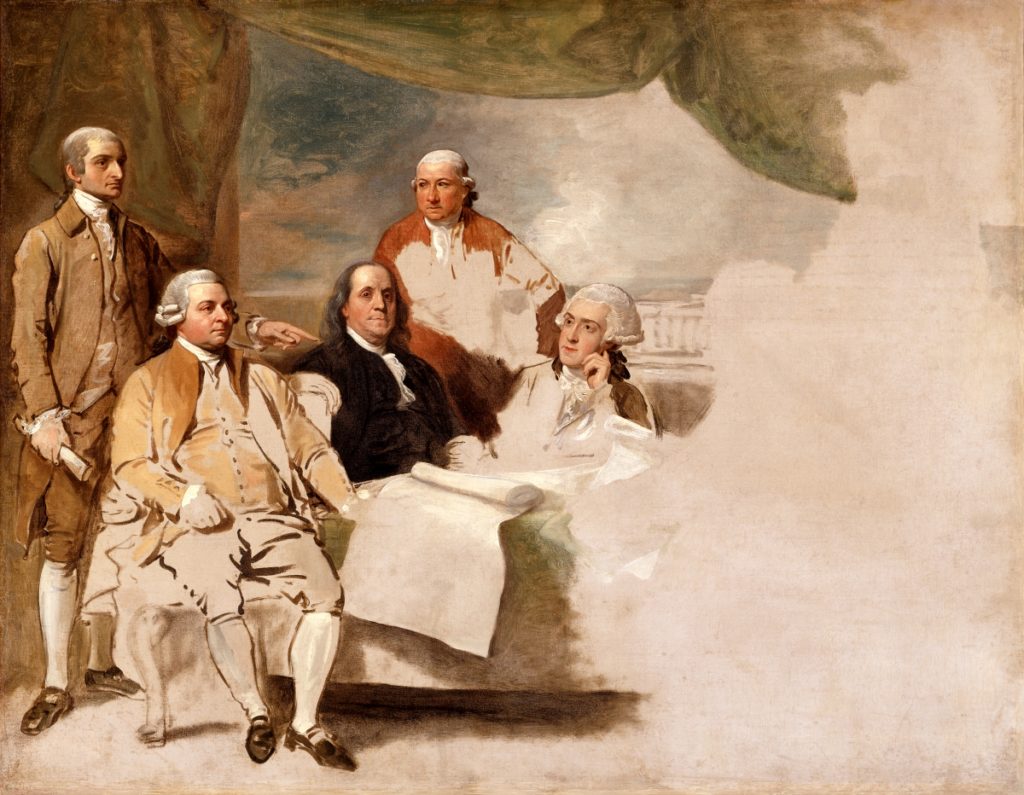
Treaty of Paris, by Benjamin West, 1783
Michael F. Bishop, a writer and historian, is the former executive director of the International Churchill Society and the Abraham Lincoln Bicentennial Commission.
History Matters is a feature courtesy of the Grateful American Book Prize, an annual award for high quality, 7th to 9th grade-level books dealing with important events and personalities in American history.