June 16 — June 30, 2026
History Matters
Showing our children that their past is prelude to their future, with book recommendations
The Battle of Little Bighorn, June 1876
Lieutenant Colonel John Armstrong Custer, the commander of the 7th U.S. Cavalry Regiment, led one of the U.S. Army columns that moved along Montana’s Little Bighorn on June 25-26, 1876. Lakota Sioux leader Sitting Bull, energized by a dream that seemed to foretell a great victory by his people, aligned with Crazy Horse; Sioux, Cheyenne, and Arapaho leaders, to attack the Americans, who were decidedly more vulnerable by Custer’s decision to split them into small detachments. Two of them were nearly destroyed; Custer’s force of 210 men was annihilated–and although there are no eyewitness accounts of what actually happened, the battle–really a series of engagements–was a great, but Pyrrhic victory, for Sitting Bull’s tribal coalition. Custer’s death led to renewed U.S. determination to crush Native American independence—forever.
For more information about the Battle of Little Bighorn, the Grateful American Book Prize recommends Nathaniel Philbrick’s The Last Stand: Custer, Sitting Bull, and the Battle of Little Bighorn (2010).
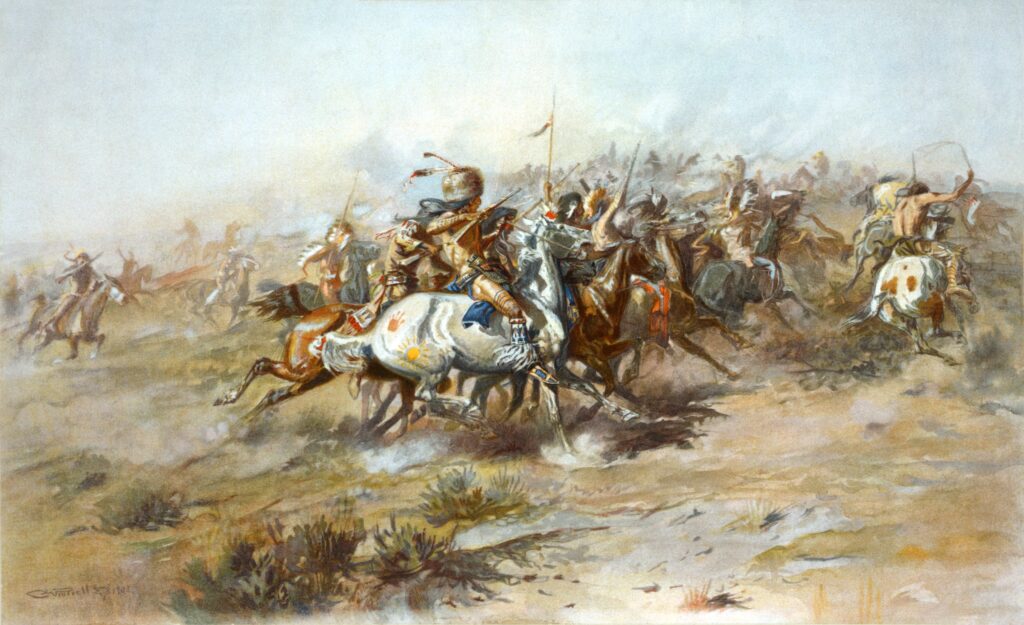
Lithograph showing the Battle of Little Bighorn, from the Indian side by Charles Marion Russell
Ed Lengel is an author, a speaker, and a storyteller.
History Matters is a feature courtesy of the Grateful American Book Prize, an annual award for high quality, 7th to 9th grade-level books dealing with important events and personalities in American history.