May 1 — May 31, 2026
History Matters
Showing our children that their past is prelude to their future, with book recommendations
The Dedication of the Empire State Building
The construction of the Empire State Building—in New York–commenced on March 17, 1930, and ended May 1, 1931. The 102-story skyscraper was completed in 13 and a half months—45 days ahead of schedule—at a cost of approximately $41 million. Governor Franklin D. Roosevelt, his predecessor, Al Smith, and two of his grandchildren, attended the public ribbon cutting on Fifth Avenue.
President Herbert Hoover pressed a golden telegraph key from the White House, read a message from the 86th floor and congratulated everybody involved in the project. According to Hoover, the building “justifies pride of accomplishment in everyone who has had any part in its conception and construction.” Despite foggy conditions that obscured views of landmarks like The Statue of Liberty, the event garnered worldwide curiosity and attention; confirmed the Building’s status as the world’s tallest structure and transformed it into a durable icon in the New York skyline. It would retain that “status” until the North Tower of the World Trade Center was completed in 1970.
For more information, the Grateful American Book Prize recommends John Taurnac’s The Empire State Building: The Making of a Landmark.
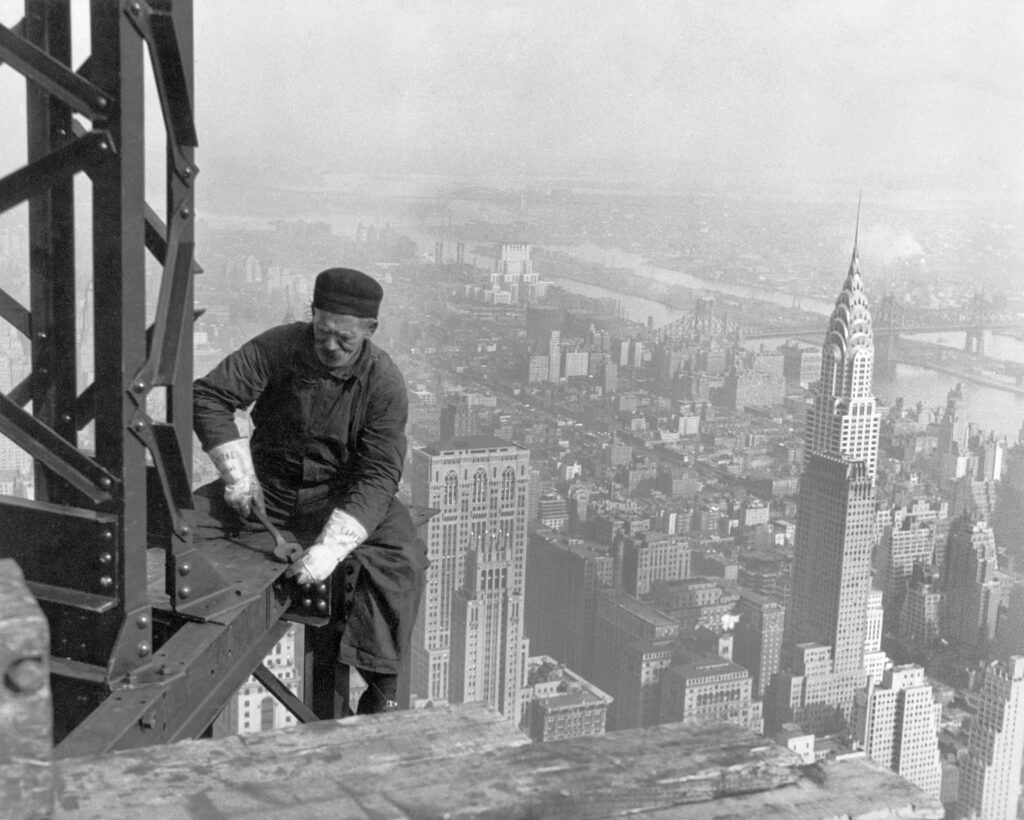
A worker bolts beams in 1930 during construction; the Chrysler Building can be seen in the background.
The Homestead Act
The 1862 Homestead Act, signed into law by President Lincoln, was intended to buttress westward expansion by offering 160 acres of public lands—in the Great Plains and/or the western territories—to any adult citizen, or prospective citizen, who was the head of a household, paid a small filing fee, occupied land five years, and cultivated crops. The “campaign” was part of a broader effort to populate the frontier with independent farmers, repel large speculative landholding, and discourage Confederate sympathizers from owning property.
Though the Act spurred significant migration and agricultural development, the results were mixed. Many settlers faced harsh conditions: droughts, insect plagues, isolation, and high failure rates. The law also had an impact on Native American populations because the distributed lands—in some cases—were seized from tribes via treaties, force, or displacement. Later amendments expanded eligibility and acreage in arid regions, but the original statute remained in effect until 1976 in the lower 48 states (1986 in Alaska) and influenced the demographic and economic landscape of the American West.
For more information, the Grateful American Book Prize recommends Free Homesteads for All Americans: The Homestead Act of 1862 by Paul Wallace Gates.
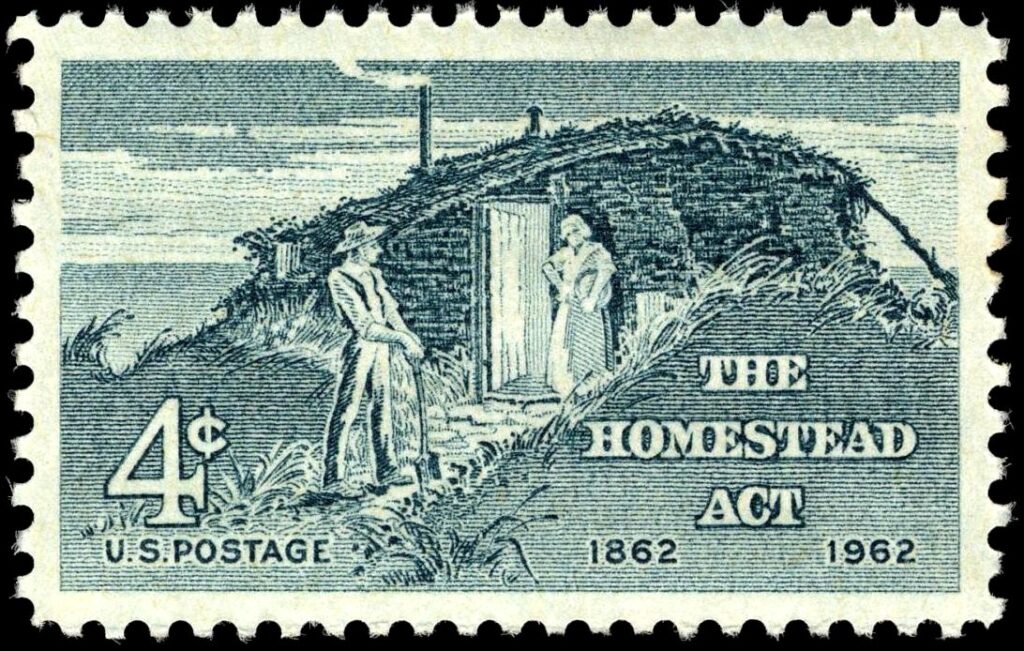
US Postage stamp, 4c, Homestead Act of 1862
Michael F. Bishop, a writer and historian, is the former executive director of the International Churchill Society and the Abraham Lincoln Bicentennial Commission.
History Matters is a feature courtesy of the Grateful American Book Prize, an annual award for high quality, 7th to 9th grade-level books dealing with important events and personalities in American history.