October 16 — October 31, 2026
History Matters
Showing our children that their past is prelude to their future, with book recommendations
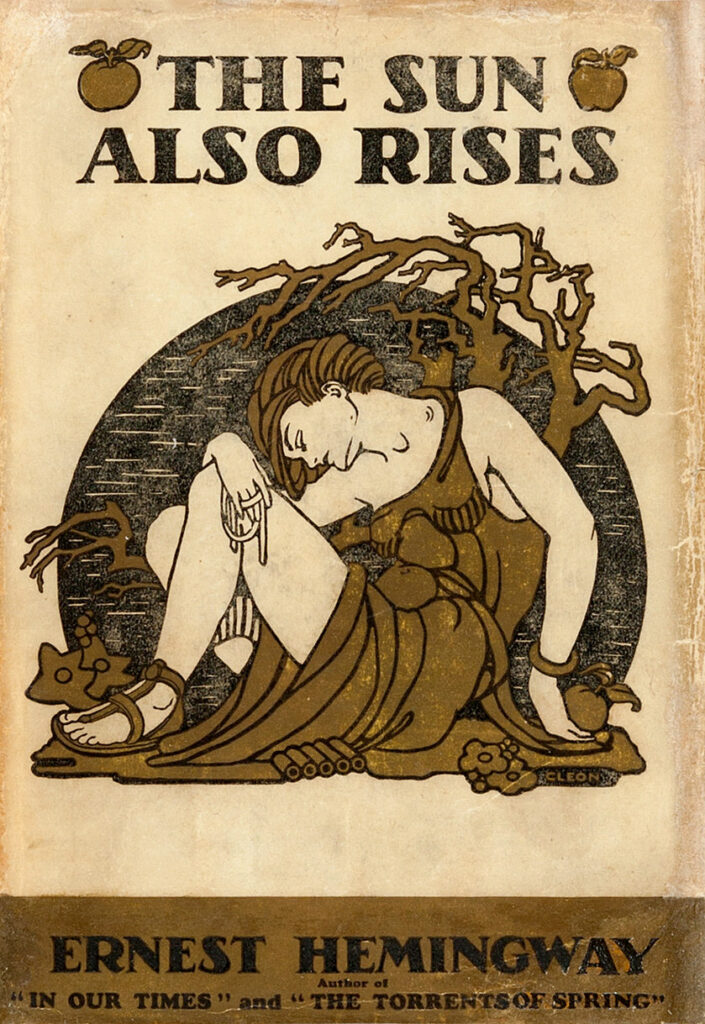
.The Publication of Ernest Hemingway’s First Novel, The Sun Also Rises, October 1926
Born into a middle-class family near Chicago in 1899, Ernest Hemingway volunteered for military service when the United States entered World War I in 1917. He was denied enlistment because of his nearsightedness, he so he joined the Red Cross as a field ambulance driver in Italy in the summer-autumn of 1918. His wartime hospital experiences encompassed a battlefield injury to the knee which confined him to a hospital; there, he fell deeply in love with a nurse, who swayed him into writing A Farewell to Arms, and other works. In the 1920s Hemingway drifted between France and Spain with the “literati,” got interested in the postwar concept of “Lost Generation,” befriended F. Scott Fitzgerald.
By the time Hemingway’s debut novel, The Sun Also Rises, was published in 1926, he was questioning the concept of a “Lost Generation,” and Fitzgerald’s doomed character, Gatsby. He, by contrast, set his novel among the people he knew in Paris, and incorporated some optimism in it, that belied much of his later/darker works. Hemingway maintained that his contemporaries—though “wounded”—had the fortitude to endure. The book garnered mixed reviews—in part—from the critics who objected to the instances of antisemitic language.
For more information about Ernest Hemingway, the Grateful American book Prize recommends Mary Dearborn’s Ernest Hemingway: A Biography (2018).
Ed Lengel is an author, a speaker, and a storyteller.
History Matters is a feature courtesy of the Grateful American Book Prize, an annual award for high quality, 7th to 9th grade-level books dealing with important events and personalities in American history.